 The Abagaitui Solar Power Plant (SES-1) (Border SES) is the first large photovoltaic plant in the Trans-Baikal Territory, located near the village of Abagaitui, near the border with China. Commissioned in 2020, it has become an important step in the development of renewable energy in the region.
Power: 15 MW
Area: about 30 hectares
Number of solar modules: over 40,000
Technology: Polycrystalline solar cells
Annual output: ~20 million kWh (provides energy to about 2,000 households)
The Abagaitui solar Power Plant (SES-2) (Druzhnaya SES) with a capacity of 60 MW is part of a large-scale program for the development of solar energy in the Trans-Baikal Territory.
Abagaitui SES-1 reduces the dependence of Transbaikalia on coal generation, contributing to the reduction of harmful emissions. The station also increases the reliability of power supply in remote areas where traditional networks often operate intermittently. This is a major solar energy project being implemented in the Trans-Baikal Territory. The station is being built by Unigreen Energy (Green Energy RUS LLC). It is a Russian company specializing in the development and implementation of projects in the field of renewable energy.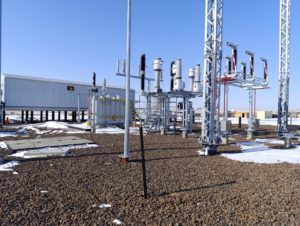
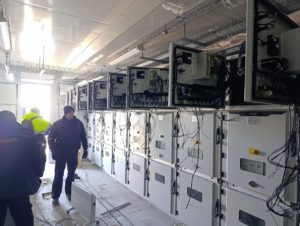
We have completed the commissioning of electrical equipment and devices of the RPA, 110 kV ORU, 10 kV CRU, SHCN, SHPT at the 110 kV Pogranichnaya substation and 110 kV Druzhnaya substation.
Exactly:
NDP power equipment (switches, disconnectors, TT, TN, OPN, SHNUH) for 110 kV ORU;
NDP devices RPA 110 kV;
POLAND 110 kV SWITCHGEAR (THIS IS, RZA, TSN);
NDP SHCHPT, ShchSN, SHGP, grounding circuit, power supply of life support systems of BMZ;
NDP power transformer.
The 110 kV Pogranichnaya substation provides power output to the Abagaitui SES-1 (Pogranichnaya SES), transformer capacity: 63 MVA. The 110 kV Druzhnaya substation provides power output to the Abagaitui SES-2 (Druzhnaya SES), transformer capacity: 63 MVA. Both substations are key elements of the infrastructure for delivering solar power plants to the energy system, ensuring reliable power supply to the region, and integrating solar generation facilities into the general energy system of the Trans-Baikal Territory.
The Abagaitui SES is an example of the successful implementation of «green» energy in a difficult climate and isolated energy systems. It will reduce CO₂ emissions by 16,000 tons annually. It will create new jobs in the renewable energy sector. The station is one of the key solar energy facilities in the region along with other projects such as Borzinskaya SES (60 MW) and Lugovaya SES (136.2 MW).